19
Oct
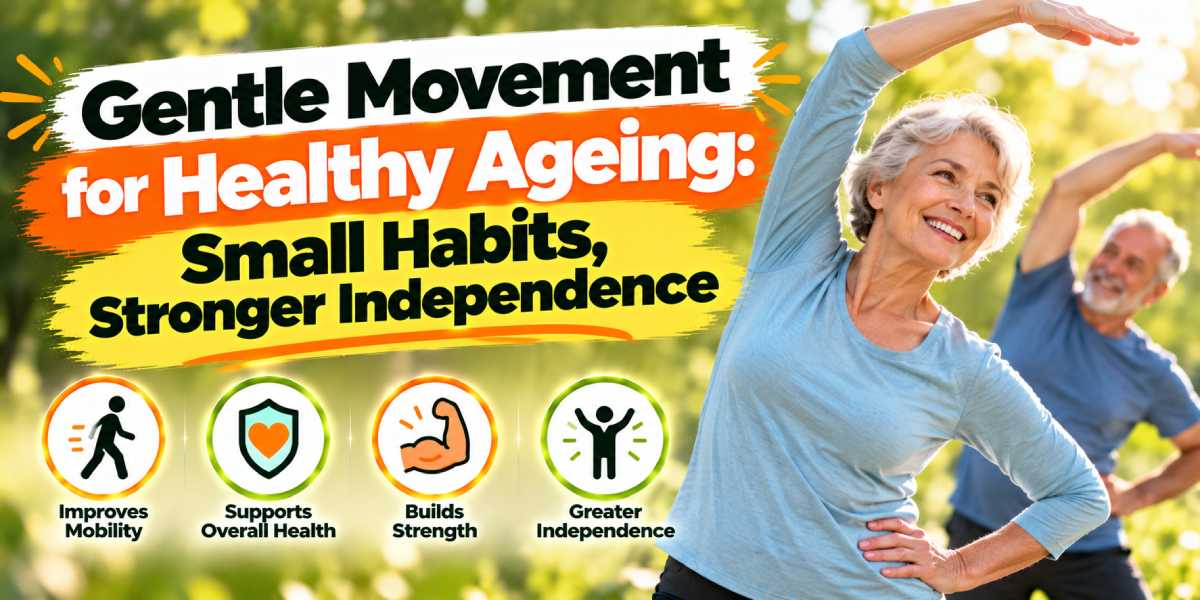
Gentle Movement for Healthy Ageing: Small Habits, Stronger Independence
Healthy ageing does not mean an obsession with physical exercise or the denial of ageing beyond 25 years old. Healthy ageing means maintaining the liberty of walking to the store, climbing the stairs, getting up from chairs, carrying groceries, and moving around without fear. For the technologically savvy among us who log our sleep, steps, heart rate, and screen time, perhaps the best “longevity metric” would be the simplest one: gentle movement.
Soft, continuous motion ensures that older people maintain their mobility, strength, balance, confidence, and independence. As per international standards, older people aged 65 and above should perform at least 150 minutes of moderate aerobic activity weekly, along with muscle-strengthening and balance-based motion exercises, but if there is any problem with mobility, then at least three days of balance motion exercises are required in a week. The best part about it is that “gentle” doesn’t necessarily mean ineffective.
Why Mobility Matters More With Age
Mobility allows us to be independent. We can either quickly catch ourselves when we stumble, or grab something off a tall shelf, or bend down to tie our laces, or stroll in an airport without getting tired. Ageing is usually accompanied by certain physiological changes in muscle mass, joint flexibility, reaction speed and balance – but lack of activity will have a much greater effect on this than ageing alone.
According to the Centres for Disease Control and Prevention, physical activity allows people to handle their conditions, improves mobility and makes activities of daily living easier for older adults. Furthermore, it provides people with additional independent years and improves brain function. In other words, physical activity is not only exercise, but it is also taking care of the body we use all the time.
Finally, there is another side of the coin which concerns the psychological aspect of mobility. When moving becomes hard, people start to avoid doing different things: walk less, avoid going on walks where paths may be irregular, refuse social activities because of being tired or afraid of falling. This, in turn, leads to weakening of our strength and balance.
What “Gentle Movement” Really Means
Gentle exercises do not constitute any specific kind of exercise program; rather, it is an exercise program that does not overexert the body. Examples of such exercises include fast walking, stretching upon getting out of bed, tai chi, yoga, swimming, water aerobics, riding a stationary bicycle, resistance exercises, as well as just sitting and standing twice a day.
This is because exercise has to be consistent rather than intense. An enjoyable 20-minute walk performed three times a week is better than an intense workout session that you cannot continue beyond two workouts.
The best exercises for older adults are those that incorporate three types of exercise, including cardiovascular exercises, strength training, and balance training. This can be done without necessarily going through complicated exercise procedures. Walking briskly and performing a couple of squats and heel raises can help to take care of all these needs.
The Science of Small, Consistent Movement
The human body is able to react very well to physical activities even if they do not appear to be very intense. Walking helps to increase circulation, heart health, and blood sugar regulation. Muscle-strengthening workouts help muscles stay active because it is vital, since muscles help joints and give posture.
Another type of physical activity is balancing workouts. For instance, exercises include standing near the counter and balancing on one foot each time and heel-to-toe walking. Multicomponent physical activity that includes functional balance and strength activities is highly recommended by the WHO for the elderly.
This matters because falls are not just a momentary injury risk. A fall can lead to fractures, hospitalisation, loss of confidence, and reduced independence. The CDC identifies reduced fall risk as one of the major benefits of regular physical activity for older adults. Gentle balance and strength work is therefore one of the most practical forms of prevention available.
Movement and the Tech-Savvy Ageing Body
If you already keep track of your performance using a smartwatch, fitness tracker, or smartphone app, you are well on your way. There are technologies that will assist you in visualising the effects of any physical activities and tailoring them to be motivating for you. Step counting on a daily basis will keep you more physically active even if it entails interrupting sedentary periods. Heart rate measurement will provide you with a better sense of what moderate activity feels like. Calendars can turn your walks into an actual appointment.
However, information should serve the purpose of enhancing your lifestyle, but not vice versa. A lower number of steps on a painful day does not mean that you are failing. A workout that leaves you sore for three days in a row is probably an indication that you need to tone down the intensity of exercises.
One good strategy is to track the patterns in your own behaviour and not the details of particular days. Track the gradual change in the time you take to walk, stand, stretching, sleeping, and freely moving.
How Gentle Movement Protects Joints and Eases Pain
The restriction in mobility of an individual as a result of injuries in their knees, hips, backs, shoulders, and necks is prevalent among humans. The above statement is correct, but then again, over-resting will make it even worse. Mobility enables the joints to move, while inactivity makes the muscles weak.
The answer does not lie in enduring high levels of pain. The key thing here is to ensure that there is an acceptable level of exercise intensity. This means that if one has a knee injury, walking a short distance in a flat ground, sitting leg extension exercises, cycling, and water exercises would be more suitable than hiking and jumping.
Although this may look easy, the most important thing is that you have to do some physical activity that can help you feel better rather than worse. In case you have chronic pain that gets worse, or any other symptoms such as numbness, weakness, swelling, and lack of balance, you must consult a specialist.
How PainBegone Supports Mobility and Well-Being
This is where PainBegone comes in. The primary aim of PainBegone is to help people to move better, with confidence and control, especially the ones in pain, stiffness, or immobility that makes physical activities difficult.
Unlike programs promoting an overall plan for physical fitness, the idea behind PainBegone is to assist with individual mobility and health. They are experts in determining why people find themselves immobile and then developing programs around it that are safe and sustainable. It can include safe strength training, mobility exercises, posture correction, pain management, and ways to remain active.
For someone who wants to have a successful ageing process but is limited by discomfort, PainBegone is the tool through which they can move from “I need to be mobile” to “I feel safe being mobile.” They do not want to be fit. They want to regain mobility to walk, stretch, sit, stand, move, and experience life.
However, if you’ve spent years being inactive and want to start exercising, a professional organisation like PainBegone can help you begin safely and choose the right starting point. The reason for this is that the best workout routine is the one your body will tolerate today and improve on tomorrow.
A Simple Weekly Rhythm
You don’t have to use any fancy software to get started. Your weekly schedule could incorporate multiple shorter walks, two bouts of light resistance exercises involving your own body weight and resistance bands, and some balance training on most days of the week. The WHO recommends at least 150 minutes of moderate-intensity physical exercise per week, muscle strengthening exercises on two or more days, and balance exercises on three or more days per week for people who find it difficult to move around.
Start off by taking small steps, literally! A walk for ten minutes is sufficient. Five repetitions of a slow stand-up/sit-down exercise from a stable chair position are sufficient. Shoulder rotations, ankle movements, and calf raises are sufficient.
Conclusion
Healthy ageing can’t be achieved through one intense bout of exercise. It is possible for one to achieve healthy ageing through minor actions such as moving farther away, standing upright, stretching and moving around as opposed to sitting down all the time. Through these minor activities, you are able to move, prevent falls, be independent and do things which make your life meaningful.
Should you have a liking towards technology, you may be able to utilise it to look for patterns and hold yourself responsible, but your body should come first. Start moving, pay heed to your body if it hurts you, move with caution, and seek an expert’s advice if the pain stops you from moving. Through PainBegone, small movement will turn your weakness into strength.