16
Oct
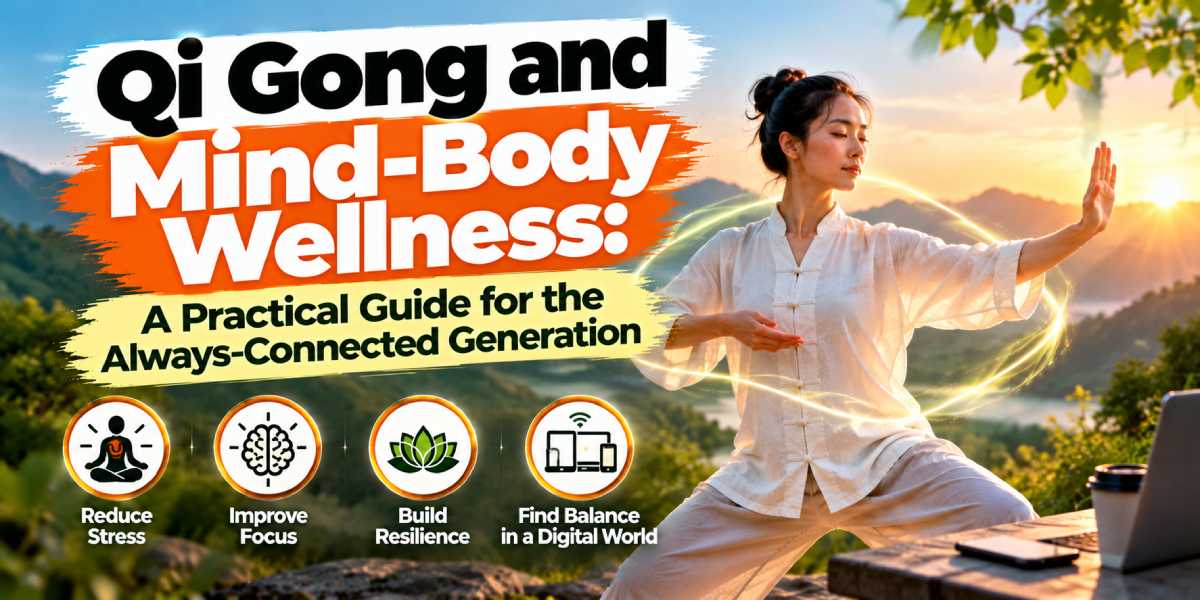
Qi Gong and Mind-Body Wellness: A Practical Guide for the Always-Connected Generation
And if all mornings and evenings you spend on endless messages and your cell phone, then the nervous system of yours will go on working even when your working day will be finished. There is such an old traditional way of life – Qi Gong, in which one may harmonise oneself with the body and the mind using breathing, movements, and focusing. For a technically minded individual, it is not disassociating from the outside world, but rather knowing how to disassociate oneself from the outside world in between meetings and after work.
Qi Gong, sometimes spelt as qigong, is an ancient Chinese mind-body practice that includes breathing exercises, meditation, movements and posture alignment. The term itself means “cultivation of life energy.” Although this concept differs from the way modern physiologists understand energy, Qi Gong offers practical benefits. It helps people recognise tension, breathe properly, and move with greater ease.
What Qi Gong Actually Involves
In simple terms, Qi Gong involves doing a series of slow and repetitive exercises that involve breathing and concentration. For instance, one can stand with his/her feet bent a little bit, relax his/her shoulders, take a deep breath and raise his/her arms while breathing out and lowering them. The type of exercise does not require any physical flexibility or athleticism whatsoever. Mind quality is of much greater importance than physical power.
Unlike physical training, which drains the body’s resources, Qi Gong is the practice intended for regulation of it. These exercises are very easy to do, the pace is normally slow, and the training is adaptable based on one’s body condition and age. In this way, Qi Gong is very suitable for individuals who are constantly sitting in front of the computer all day long.
From a contemporary perspective, Qi Gong belongs to the same category of practices as Tai Chi and yoga – mind-body movement interventions that include postures, movements, breathing, and meditation. This combination is precisely why it can feel useful in a high-stimulation world. Instead of asking your mind to “think positive” while your body remains braced and tense, Qi Gong gives both systems a shared task.
Why It Resonates With Tech-Savvy People
Getting information has never been easier thanks to technological advances, but technology has ensured that getting rest has become increasingly harder. It is not unusual to have calendars, Slack messages, social media notifications, and tabs in web browsers all occupying your attention. Even though everyone knows the importance of stress reduction, it is challenging to find an alternative method that does not include some form of optimisation.
Why is Qi Gong so effective? This happens due to the fact that it is convenient and quantifiable. It may be done in your living room, hotel room, corner office, and even a park. Five minutes of practice is enough as a ritual practice at the end of your working day, and a longer 20 to 30 minutes of practice may be done as a recovery ritual on a hard day.
Also, it is inherently compatible with the thought process of those individuals who thrive on feedback. During your practice sessions, you will start noticing patterns forming in various situations, such as shallow breathing when working on your deadline, a tensed jaw while taking video calls, tense hips because of long periods of sitting and a busy mind while trying to sleep. This is not something mystical, but an instance of interoception.
The Mind-Body Connection, Explained Simply
The concept of mind-body equilibrium does not include the situation where mind and body function independently but occasionally communicate. Mind-body equilibrium relies on a lasting connection between the mind and body. Stress can cause tense shoulders, rapid breathing, digestive problems, insomnia, and difficulty concentrating. In turn, by managing breathing and body movements, one can manage stress levels and mind condition.
This method is adopted in the practice of Qi Gong. Nasal breathing assists in entering a more relaxed physiological condition, while smooth movements assist in releasing the tensions in the neck, shoulders, back and jaws that build up because of the constant guard position. One particular practice of Qi Gong has been associated with lower anxiety and optimal autonomic nervous system function.
For a tech worker, this approach can be particularly helpful because long hours of intensive work in front of screens always come with the certain posture of head bent forward, rounded shoulders, tight breathing, and a nervous system ready for action.
Evidence-Based Benefits Without the Hype
It is not some sort of miraculous solution that will work wonders for you, and no respectable Qi Gong practitioner would ever attempt to promote it as such. However, the scientific findings prove that there are quite a few good things about Qi Gong.
There is evidence from studies and reviews suggesting that Qi Gong can be helpful in reducing stress, anxiety, depressive symptoms, sleep quality, fatigue, physical fitness, balance, and quality of life. In 2022, one review reported considerable benefits of Qi Gong in cardiorespiratory endurance, flexibility, and depression and anxiety symptoms. There was another 10-week study that showed improvements in overall health, fatigue, memory, and response time.
For pain specifically, the evidence is promising but mixed. As per information from the National Centre for Complementary and Integrative Health, while some studies suggested that Qi Gong works well in treating pain and stiffness as well as improving physical functionality, other studies have revealed opposite findings for low back pain and neck pain. Those patients who had fibromyalgia and practised Qi Gong on a regular basis (for 30 to 40 minutes a day for six to eight weeks) received favourable results.
In conclusion, Qi Gong can be helpful for discomfort, mobility, stress, and recovery, but it should not replace professional diagnosis and treatment.
A Realistic Practice for Busy Schedules
The most typical mistake made when practising Qi Gong is thinking of it as something that requires everything or nothing. No special amount of time, no retreat, and no perfect conditions are required for Qi Gong. What you need is repetition and enough concentration on the process to understand what is happening with you.
Five to ten minutes per day will be a good beginning. Firstly, one needs to take a comfortable position with legs apart and shoulders relaxed. One should breathe calmly, with exhalation being a bit longer than inhalation. Then one should perform an easy exercise, which consists of lifting the arms upwards while breathing in and lowering them downwards while breathing out. This exercise should be done smoothly and slowly.
It should not be about striving towards the ultimate posture. It should be about creating an ideal condition where breathing, movement, and concentration work together.
For people who love order, guided classes will remove all their doubts. And this is why the work of a professional wellness coach becomes so important. PainBegone offers guided classes of Qi Gong that restore balance, enhance movement, concentration, and overall wellness. Due to the customer-friendly approach and professional wellness coaching of PainBegone, it may become an ideal choice for novices.
How PainBegone Supports Mind-Body Health
PainBegone looks at health as more than just individual activities. Their services involve assisting individuals to restore their body’s ability to maintain balance, mobility, and healing. In addition to Qi Gong, PainBegone provides energy-balanced healing services that stress the importance of restoring the energy flow in the body, mind, and spirit.
It can be quite attractive to a tech-savvy audience as it covers all aspects of modern-day stress – physical stress, mental stress, sleep disruption, and inability to turn off. Instead of treating a sore neck as a neck-related problem and stress as a mental problem, PainBegone’s mind-body health programs consider how all of these aspects interact with each other.
No matter whether you are an athlete, an office worker, or just a human being who tries to find the right balance in his/her life, the classes of Qi Gong will serve as a perfect basis for regulating yourself. The assistance of an experienced instructor is especially important when you have pain or mobility problems as well as any kind of trauma.
Making Qi Gong Part of a Digital Wellness Routine
The most effective wellness practices are those that blend well with your reality. Qi Gong can complement existing digital practices, not oppose them. For example, you can set an alarm to perform Qi Gong practice before your first meeting of the day, do some movements in between focus sessions or replace evening scrolling through social media with breathing and moving practice.
Imagine it as maintenance of your attention and body. Just as you update your software, save your files and recharge your devices, Qi Gong provides a schedule for discharging the nervous system and resetting. It doesn’t mean that you have to forget about using technology. It means that Qi Gong helps you use technology but not let it control your whole physical and mental states.
Consistency matters more than frequency. Many studies that show the advantages of doing Qi Gong usually mean that it should be practised regularly for weeks and months rather than one time.
Conclusion: A Calmer Way to Stay High-Performing
Qi Gong is an approach to wellness that stands out in many ways because of its ability to help individuals who have just started their wellness journey and who are too busy to find a practice that will enable them to maintain a healthy balance between the body and the mind.
For those who lead a hectic digital life, Qi Gong is not something that should take them away from reality but rather give them the means to face the challenges of today’s fast-paced life with improved regulation of their body and mind. With the help of PainBegone, one can learn how to practice Qi Gong effectively.