15
Oct
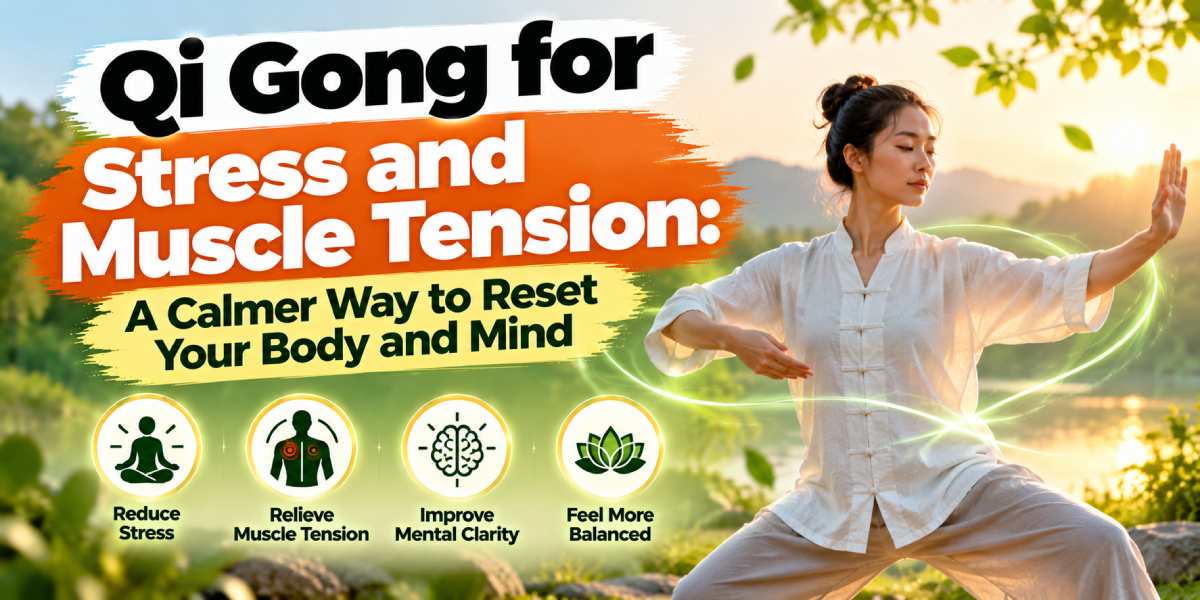
Qi Gong for Stress and Muscle Tension: A Calmer Way to Reset Your Body and Mind
When you realise that your shoulders rise to your ears when you attend consecutive meetings, your jaw is firmly clenched after a day of working on the computer, and your back is tense even before you have finished your morning cup of coffee, you are not alone in this situation. The current process of work causes a decrease in the level of alertness of the nervous system, and the body reacts to this and stores up tension in the neck, shoulders, hips, and back.
The solution to this problem can be found in Qi Gong, an Asian-based mind and body practice technique. In all movements and techniques done in Qi Gong, from slow movements, breath control, postures, and concentration, the body learns how to relax and move without any difficulties. This technique is very helpful, especially for IT professionals, those working remotely, and everyone experiencing physical symptoms of stress and anxiety. There are scientific studies that prove that practising Qi Gong for one or two months can decrease the feeling of stress and anxiety.
What Is Qi Gong?
Qi Gong, or qigong, is an ancient Chinese exercise that concentrates on the cultivation and harmonisation of qi, which can be defined as vital energy or life force. In simple terms, Qi Gong might be described as a form of exercise combining various factors such as alignment, relaxation, rhythm, and mindfulness.
Whereas, in order to work out, you need to push yourself; in the case of Qi Gong, you should pay attention to something else. This implies actions such as slow lifting and lowering of your hands, shifting your weight from one foot to another, or coordinating your breathing with your movements.
It is especially important for those who spend much time sitting, typing, scrolling, and solving problems.
Why Stress Becomes Muscle Tension
Stress is also not just a cognitive state. The brain reacts to the sense of pressure and stress in a way that creates protective mechanisms. Muscles may tense up, respiration becomes shallower, and posture may alter without you even being aware of it.
Over time, this could lead to certain muscle patterns developing in your body – a tensed upper back, clenched jaw, a stiff neck, a compressed chest, or heavy hips. However, the cycle is a vicious one – tension can increase stress, and stress can cause your muscles to remain tense.
Qi Gong breaks this cycle through actions on both fronts – the slow and deliberate movements will help you ease out of the physical tension, and the breathing and focusing on the present moment will help you relax and calm down the stress response.
The Science Behind the Calm
The findings for Qi Gong are quite promising, especially in cases of stress and anxiety. According to various scientific studies performed in randomised controlled trials, there is evidence that Qi Gong is effective in managing stress and anxiety in healthy persons when compared with wait-list controls after one to three months’ treatment.
Furthermore, Qi Gong may provide positive effects for other mind-body functions including sleep efficiency, cardiac and respiratory performance, cognition, and stress assessment. The point to consider here is that low-intensity Qi Gong can be classified into exercise types that produce less stress perception.
However, honesty in science is important. Not all studies have positive outcomes, and some reviews report mixed results or even mention some limitations in research quality. However, despite these facts, Qi Gong is still a low-risk and available activity that combines several mechanisms for reducing stress and muscle tension.
How Qi Gong Releases Tension
Qi Gong works on muscle tension in several interconnected ways.
First, it encourages deep breathing. The more one breathes deeply and rhythmically, the more one’s diaphragm is going to be relaxed, the more one’s nervous system is going to be focused on digestion and relaxation, and the muscles get a message to release tension.
Secondly, it helps one maintain a good posture and be in tune with their body. Most people don’t notice tension in their bodies until they practise techniques that help them release it. It involves relaxing the shoulders, unblocking the knees, straightening the spine and relaxing the jaw.
Thirdly, this is because the movement is fluid. One does not have to push themselves into stretching; they just go according to their comfort level. This helps improve circulation in the body and loosen up certain parts of the body, for example, the neck, shoulders, wrists, and lower back.
Finally, it trains attention. When your focus settles on breath and movement, the mind has less room to rehearse tomorrow’s problems or replay today’s frustrations. That mental pause is often where physical tension begins to dissolve.
A Simple 5-Minute Desk Reset
The need for a studio, special clothing, or even just an extra hour does not have to be met before you begin to practice. Try out this fast practice routine in the middle of all your meetings or at the end of a tiring day at work.
Place your feet away from each other by the width of your hips. Do not straighten your legs; keep them gently bent where they are now. Have your arms in a comfortable pose and then rotate them backwards. Take deep breaths for three rounds and ensure that you breathe out more than you breathe in.
Now lift both arms slowly from the front while breathing in, and feel as if you are lifting something light. Bring the arms down slowly while exhaling and release all the tension created in the shoulders and hands. This exercise should be done five to eight times.
Now put one of your hands on your belly. Breathe in such a way that while exhaling, your hand comes up and then goes down. Ensure that your jaw, tongue, and shoulder muscles are all in a relaxed condition. Your tongue should not come in contact with the palate.
Complete this exercise by rotating your torso slowly from side to side, moving your arms freely. The rotation should be gentle. Continue for two minutes and then stop to check if you feel easier breathing or improved posture.
Making Qi Gong Work in a Tech-Heavy Life
For people who are busy, the problem is not in learning difficult methods, but rather in doing them. The key here will always be an easy method, one which you can do repetitively and integrate into your daily routine.
It can be two minutes of breathing exercises before turning on your computer, five minutes of movement after your lunch break, or a few standing movements before you relax for the evening.
It also helps to treat Qi Gong as a recovery tool rather than another task to optimise. You are not trying to “fix” your body aggressively. You are giving it a reliable moment of safety, mobility, and attention.
How PainBegone Can Support Your Practice
If one needs more advice beyond just the video and application, PainBegone provides the services of Qi Gong-based wellness programs which aim to help people restore balance, reduce stress, and improve their well-being through Qi Gong practice. Their services include Qi Gong lessons along with a holistic approach to pain relief, with Qi Gong training and 21 other pain-relief practices.
Other services that PainBegone provides include life and happiness coaching, wellness education, natural health consultations, hypnosis, energy balancing, and sound and vibration wellness. This might be useful for you in case stress and muscle tightness have become a recurring problem.
The program, when planned properly, will allow you to know how to keep the right posture, schedule your exercises as per your requirements, and have a proper exercise routine. However, if you have any health issue, injury, severe pain, dizziness, or are pregnant, then you must consult a doctor before participating in any physical activity.
A Calmer Way Forward
Qi Gong is not going to get rid of all deadlines, notifications, and hard conversations. However, it will be capable of altering the way your body processes these stimuli. Through the use of conscious breathing and slow motions, Qi Gong allows you to release the physical stress that is caused by stress and gives you a guaranteed way to reset your nervous system.
It becomes highly effective in this modern era of technology and information. There is no need for you to detach yourself from the world around you; you just have to spare some minutes every day by getting back in touch with your breath, relaxing your muscles, and moving smoothly. With regular practice, and if necessary, with the help of PainBegone, Qi Gong will become the practical basis of your life.