31
Oct
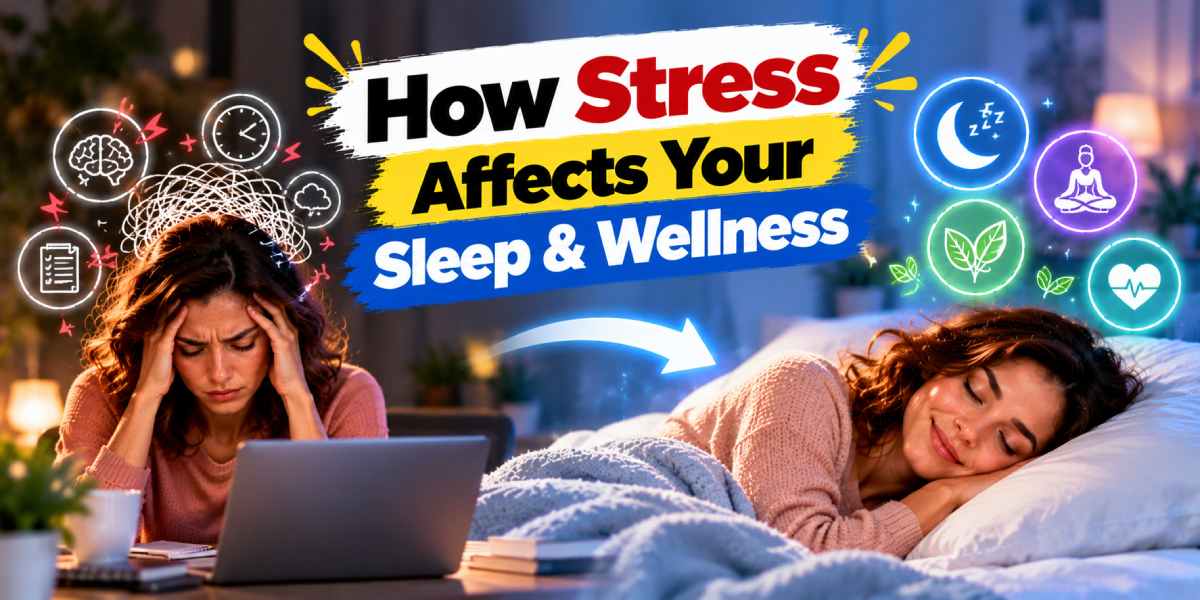
How Stress Affects Your Sleep & Wellness
Stress and sleep are very much linked. Our minds are constantly on high alert, and it can be difficult for our bodies to switch off and relax. This can cause us to get a poorer quality of sleep, which in turn can increase stress and lead to issues with mood, focus, physical health and overall wellness.
As a tech-savvy generation, we often experience stress-related sleep issues. With late-night notifications, endless scrolling and working from home, combined with pressure to perform financially and constant information, it can cause our nervous system to stay on high alert. However, there are ways to help manage stress-related sleep issues.
Why Stress Affects Sleep
The body will always have a natural response to stress, which involves going into the fight-or-flight response. This is where the body responds to stress through the production of stress hormones such as cortisol and adrenaline as a way of responding to stress that can be caused by deadlines, difficult talks, and emails.
While this mechanism may assist the person in the face of danger, it becomes a problem at night when you want to unwind. The mind may start recalling discussions, anticipating the next day, or looking for issues, which makes it difficult to fall asleep and easy to wake up during the night.
Stress can also cause issues with your sleep patterns. Whilst you are getting enough hours in bed, it can cause you to have a shallower sleep, more interruptions and not as much deep sleep.
Stress & Sleep Cycle
Stress can cause poor sleep and poor sleep can cause more stress.
Lack of good sleep can affect your brain, meaning that you are more likely to become irritated, anxious, stressed and reactive throughout the following day. Everyday problems will seem bigger, therefore increasing stress. Studies have shown that a lack of sleep or poor sleep can cause increased feelings of depression, anxiety and stress.
It can begin with little issues such as needing an extra caffeine hit, being less patient in meetings and reaching for your phone at night. But over time, it can affect how well you perform at work, your relationships, exercise and motivation to look after your health.
Affect on Overall Wellness
Sleep is a very active process in your body. It helps with memory, emotional processing, immunity, metabolism and physical healing. There are many things to consider when thinking about your sleep quality. This includes how long you are sleeping, when you are sleeping, consistency, how satisfied you are with your sleep and how efficient your sleep is.
Long-term sleep disruption can cause many issues. This can cause issues with your mental health, physical health and cause more issues when dealing with everyday stressors. Research also shows that sleep disruption can cause stress to relate to poorer self-rated health, partially.
For those of us who spend a lot of time on our screens, lack of quality sleep can cause issues. This can cause issues with concentration, slower reaction times, poor decision-making, and difficulty switching off from work. Physical tension can also increase, especially in our neck, shoulders, jaw and back. Many people unconsciously hold their stress in these areas.
Digital Stress
Whilst using technology isn’t necessarily bad for your sleep, using it can cause issues. Constant notifications, social media, work messages and streaming can cause your brain to be stimulated late into the evening.
Research has shown that smartphone dependency is one of the ways stress can cause issues with your sleep. This can cause you to spend an hour scrolling through your messages instead of just one extra message. This keeps your brain on high alert.
As tech-savvy individuals, we can utilise our devices to help. Set your devices to focus mode, set limits on your apps, set them to grey scale, set a sleep alarm and use mindfulness or breathing apps.
Signs You Are Experiencing Stress-Related Sleep Issues
You don’t have to be an insomniac all the way to do something about it. Some symptoms might include having difficulty falling asleep, waking frequently, early morning awakenings, anxiety when going to bed, waking with an active mind, drowsiness throughout the day, headache, muscle tension, depression, and concentration problems.
In case you have been having these kinds of difficulties for at least two weeks or in case your insomnia is causing you problems in terms of safety, work, and emotional well-being, then you need to see a health care practitioner. Our methods will complement your treatment.
Simple Tips To Help Reduce Stress
Whilst we cannot completely remove stress from our lives, we can help give our nervous system clear signals that it is safe to relax.
Set your devices to go into a wind-down period 30-60mins before bed. This means reducing bright lights, putting your work notifications on pause and doing something calming. Examples of such activities include reading, stretching, writing in a diary, and listening to soothing music. The other approach could be sticking to a regular schedule of going to bed and waking up in order to manage the biological clock.
Breathing exercises can prove to be helpful. It distracts one from thinking and forces to focus on his or her body. Examples of breathing exercises can be nose breathing, deep exhalation, muscle relaxation or a quick meditation session. Research reveals that performing relaxation exercises before falling asleep, such as deep breathing and meditation, leads to improved quality of sleep.
It would be great to get engaged in physical activity during the day in order to release stress and sleep better at night. However, there may be people who become overstimulated after performing intensive physical activities at night. Gentle exercises such as Qi Gong will help with that.
Where PainBegone Fits In
Our approach to health and wellness is centred around a purpose-built service that aims to lessen pain, achieve balance, replenish energy and improve health and wellness to the fullest extent possible.
We offer Qi Gong as well as 21 methods of pain reduction through movements, breathing and overall wellness principles aimed at providing you with relaxation, mobility, energy boost, mood improvement and sleep quality improvement. Whether you feel tension in your neck and back, have headaches, or just feel like you need to become acquainted with your body again, we can help you with that.
Alongside this, we also offer Natural Health Coaching, which can help you slowly begin to change your lifestyle. Our Lifestyle & Happiness Coaching will help you to create new healthy habits, decrease stress, boost confidence and bring more balance to your life. This can be extremely beneficial for busy professionals who know what they should be doing but need some guidance and support to help them stay on track, focused and create an achievable plan.
If you are interested in improving your mindset and subconscious, we offer Positive Thinking & Success Hypnosis. This can help you overcome limiting beliefs and create a more positive outlook. We also offer Energy Balanced Healing and Sound & Vibration Healing to help you relax, improve mood and improve overall wellness.
Please note that we offer complementary wellness and relaxation services. They are not medical services and therefore cannot be used to diagnose, treat, cure or prevent disease. This makes them a great option to help you with wellness practices, healthy lifestyle changes and, if needed, medical services.
Create a Consistent Routine
Keep things simple! Just try doing 2-3 easy things each evening. Dim the lights once dinner is over, charge your cell phone anywhere except your bedroom, practice breathing slowly for 5 minutes and carry out a quick body scan.
If you experience any pain or tension, then try dealing with it. Simple exercises, relaxation techniques and customised wellness treatment can prove helpful in reducing pain and making relaxation easy. At PainBegone, we specialise in customised treatment, home exercises and creating a customised plan for you.
Be consistent rather than perfect! Just because you have a bad night doesn’t mean you have lost any progress. Just because you have a relaxing night doesn’t mean your chronic stress will disappear overnight. However, doing small things consistently will help your nervous system to know it’s time to relax at bedtime.
Conclusion
The impact of stress on your sleep can be through its effect on keeping your body alert. Poor sleep, on the other hand, can affect your ability to handle stress in the future. Boundaries with regard to technology, relaxation, exercise and physical tension are some ways of breaking this cycle.
Through Qi Gong, health coaching, hypnosis, energy balanced healing, sound & vibrations and lifestyle coaching, we have a holistic way of dealing with your stress and improving your sleep. This is because we view sleep as being an important aspect of your overall wellbeing which can help you conserve your energy and become more resilient.