
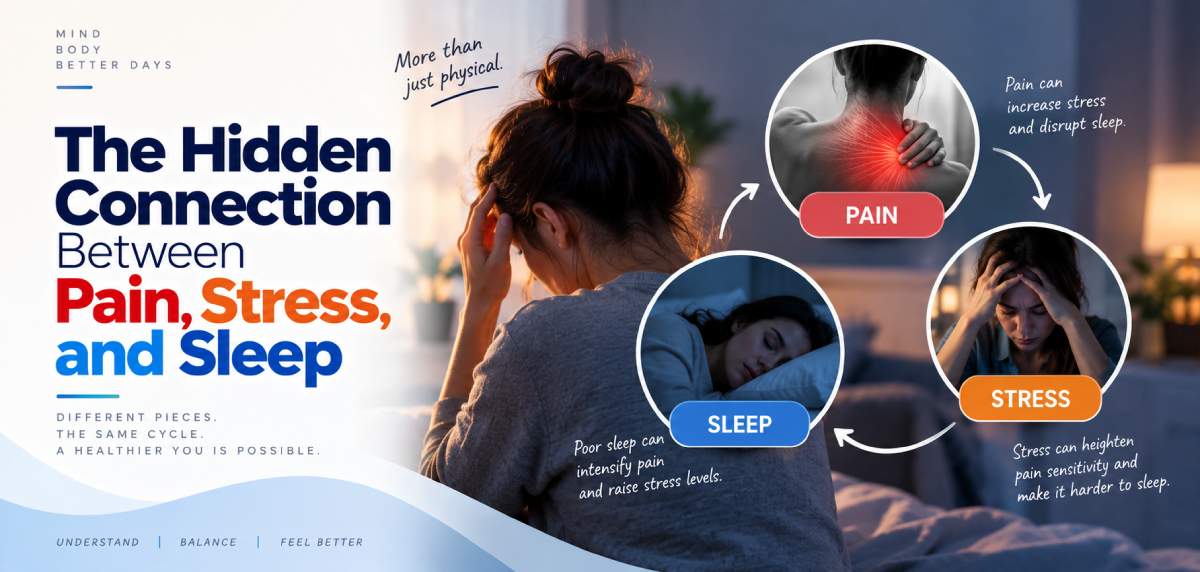
The Hidden Connection Between Pain, Stress, and Sleep
Pain, stress, and sleep are interlinked. Any disturbance in one will quickly reflect on the other two. Pain that lasts for a long time might make it hard for you to fall asleep. Not getting enough sleep makes one more sensitive to pain, and stress can lead to muscle tension, making the pain even worse.
All these will create a vicious cycle that will have effects on your ability to concentrate, your mood, mobility, productivity, and general well-being. In the case of individuals suffering from spinal, joint, or musculoskeletal problems, knowledge of this connection is the first step to improved health.
Patient-centric treatment at Surgical Solution is about identifying the cause of the pain and offering appropriate solutions. With the help of specialists and modern approaches, the team at Surgical Solution strives to provide patients with comfort and mobility.
Understanding the Pain-Stress-Sleep Cycle
Pain is an indication that some action needs to be taken regarding the affected region. The source of pain could be physical damage, nerve compression, back disease, degeneration of joints, inflammation or the surgical recovery process. While some cases of pain are temporary and manageable, the continuous pain might impact the nervous system and the manner in which the brain perceives pain.
Continuous pain may cause the body to stay alert. Thus, a person who suffers from it will have trouble relaxing while sleeping. Consequently, one will be too busy trying to get into a comfortable position and thinking about how to deal with the pain attacks that will come in the next day.
Such circumstances may be further complicated by additional sources of stress, such as work obligations, financial problems, household duties and health worries. All these stress factors can trigger the body’s natural reaction that consists of racing thoughts, muscle tension, being alert and inability to turn off at nighttime.
Without enough time to recover from the day’s activities at night during sleep, people will begin to experience more awakenings and fatigue despite spending enough time in bed.
Typically, the cycle tends to go as follows: pain affects sleep, which in turn makes people more sensitive to pain, and stress complicates things further.
How Pain Disrupts Sleep
There are various ways pain can affect sleep. One of the most frequent problems is discomfort while lying down. There are specific diseases affecting the spine, joints, and nerves that may bother one more during the nighttime.
Back pain could make it hard to find a comfortable position. Neck pain could make it hard to turn your head, while hip or shoulder pain would make it impossible to lie on that side. Some patients could find it difficult to turn or press any sensitive area in their beds and keep waking up as a result.
Nerve-related problems could cause such symptoms as burning, tingling, numbness, and shooting sensations. These problems could come suddenly to disrupt sleep even after falling asleep. The muscle spasms could make sleep less comfortable and lead to frequent interruptions.
Pain could also disrupt sleep through psychological factors. Someone who knows that the night is going to be problematic would start associating going to bed with stress. They could find themselves checking the time, trying out different positions, or thinking of the fatigue they will feel in the morning. That way, the brain would stay active at times when it should relax.
Disrupted sleep would affect the amount of energy, mood, concentration, and recovery of the patient. Without enough rest, it could be harder to deal with inflammation and injuries.
Why Poor Sleep Can Increase Pain
The effects of lack of sleep go beyond being tired. Lack of proper sleep can also alter your body’s pain response through the nervous system. This is because of heightened sensitivity to pain that makes one feel pain more intensely.
Being fatigued will make it all the more difficult for one to be patient. It will seem like everything hurts more when one has had no proper rest. You may have difficulty engaging in any physical exercise, physiotherapy sessions, good posture, or even everyday tasks around home or at work.
This doesn’t mean that pain is imaginary or due to a lack of proper sleep. Pain is real, and there are many factors influencing the way it is felt. Getting better sleep may make it easier for your body to deal with pain and participate in treatment.
In the event of any recurring problem with the spine or orthopaedics, it is extremely crucial to undergo a specific evaluation. Pain may originate from muscles, joints, discs, nerves, and/or other tissue structures. Here at Surgical Solution, our aim is to identify the cause of your pain and treat it.
The Role of Stress in Pain and Sleep
Nonetheless, stress is associated with both physical and psychological implications. Muscle tension is common during chronic stress, and that is because muscles become tense for a long period of time. The areas that experience the tension include the neck, shoulders, upper back, and lower back areas of the body.
There are people who clench their jaw, lift their shoulders, and sit in a stiff position while working at the desk. On the other hand, there are people who breathe shallow breaths when feeling anxiety.
Stress can affect the way in which an individual perceives pain. The feelings of fear, frustration, and uncertainty can make the symptoms seem much more menacing. An individual scared of missing work or going through surgery will focus on any sensation in order not to miss anything.
At night, stress often appears as racing thoughts. Concerns about health, appointments, responsibilities, or finances can delay sleep, even when the body feels exhausted. When pain occurs at the same time, the mind may repeatedly assess symptoms and search for a comfortable position.
Although dealing with stress cannot substitute for medical care when there is a structural problem, some techniques, like relaxation and emotional support, can improve the quality of patients’ sleep and active participation in their own healing process.
When to Seek Specialist Care
Fluctuating pain can be treated using rest, exercise, and proper management techniques. Ongoing, chronic, or recurring pain needs professional help if it interrupts your sleep and activities.
If the pain persists for several weeks, limits your activities, recurs regularly, and does not respond to conservative treatments, then seeking professional help becomes imperative. Other symptoms include numbness, muscle weakness, radiating pain to the arm or leg, and poor coordination.
Some conditions necessitate immediate medical attention. This includes the following symptoms: excruciating pain following injury; weakness progressing over time; loss of bowel and bladder control; numbness around the inside part of your thigh or in the saddle region; unexplained fever and severe back pain; weight loss and symptoms without any explanation.
Consultation with a specialist does not necessarily imply undergoing surgery. There are many conditions that can be successfully treated without any invasive procedures. Nevertheless, there might be cases in which it is worth getting a second opinion when the patient suffers from severe pain due to the compression of nerves, instability of the spine, or extensive joint damage, among other conditions.
Surgical Solution offers consultation from a specialist for those patients who want to understand their diagnosis better and treatment options. During a consultation, patients are able to discuss their symptoms, previously received treatment, lifestyle, and recovery goals.
How Surgical Solution Supports Recovery
Good care starts by listening to the patient. Two individuals who have identical scans can be feeling differently about their symptoms, with different needs in work, sleeping habits, and priorities.
The Surgical Solution employs an individualised approach in dealing with various problems. It depends on the nature of the problem to decide whether it will involve prescription of medicines, physiotherapy, injection, minimal intervention or even surgical procedures.
When recommending surgery, there must be good communication. Patients need to know why a particular operation is necessary, other options which exist, what recovery will be like and the expected outcome.
Recovery does not end with treatment. There is a need for guidance on how to move, how to stand, rehabilitation and exercise, among other things. Going back to normal life will bring more confidence and good sleep.
Since the problem is being addressed at its root cause, the right kind of therapy could help alleviate the symptoms that might be causing wakefulness at night. It would depend on the diagnosis and the patient’s own health condition, but at least a solid basis is achieved.
Practical Ways to Support Better Sleep
Medical interventions are crucial; however, daily activities can also promote the connection between pain, stress, and sleep. Having a regular sleep and wake cycle will allow your body to develop an adequate rhythm.
Creating a comfortable sleep atmosphere can be helpful. Cool, dark, and quiet conditions can lead to better sleep. People who suffer from back pain can use a pillow between the knees when they sleep on their sides or under the knees if they sleep on their backs. Those positions should be comfortable and should not cause any pain.
Gentle physical activity during the day may prevent stiffness for some patients. Walking, stretching, and physiotherapy exercises can promote mobility; however, such activities should correspond to the patient’s health condition. If a person experiences sharp, radiating or worsening pain, he or she shouldn’t neglect it.
The preparation of the body for sleep could be responsible for the decrease in hyperarousal caused by stress. Slow breathing, having a warm bath, reading a book, and muscle relaxation exercises are methods to relax the body. Screen usage before sleep can cause mental arousal.
Alcohol, caffeine, and nicotine may have a detrimental effect on sleep quality. People using painkillers should strictly adhere to a doctor’s recommendations.
Treating the Whole Person
The interplay between pain, stress, and sleep demonstrates the importance of taking a broader view when dealing with medical treatment. A patient might have to be treated for a physical problem, get recommendations on how to move without injury, receive assistance with establishing healthy sleep, and guidance on how to cope with worries regarding his/her recovery.
Taking a comprehensive approach is not about considering all physical issues as merely mental. It implies appreciating the relationship between the nervous system, muscles, sleep, psychology, and habit.
There is a need for patients to set clear goals, which include getting enough sleep, moving without experiencing any pain, going back to work, being free from the dependency on drugs, and doing normal activities with confidence.
Sometimes the improvement can be slow, and some problems may be solved only by conservative methods, while others will need surgery. The right choice can be made only after evaluation and consultation.
Conclusion
Sleep, stress, and pain are all interconnected. Persistent pain can affect a person’s ability to have good sleep; lack of sleep can cause increased sensitivity to pain, while stress can lead to muscular tension and thoughts racing around in one’s mind.
Proper sleeping habits, exercise, and relaxation techniques, along with the assistance of a specialist, might solve the problem. At the same time, however, worsening or persistent symptoms cannot be ignored.
Surgical Solution provides consultations and personalised treatment options for patients suffering from spine and orthopaedic problems, as well as patients suffering from pain conditions. No matter whether the patient requires conservative treatment, diagnostics, or surgery – the first thing that is important is understanding the nature of the problem.
Sleep is not only an aspect of comfort but a way to recover physically and emotionally, and to remain capable of taking part in one’s normal everyday activities. Proper diagnosis and treatment can make it possible.