10
Oct
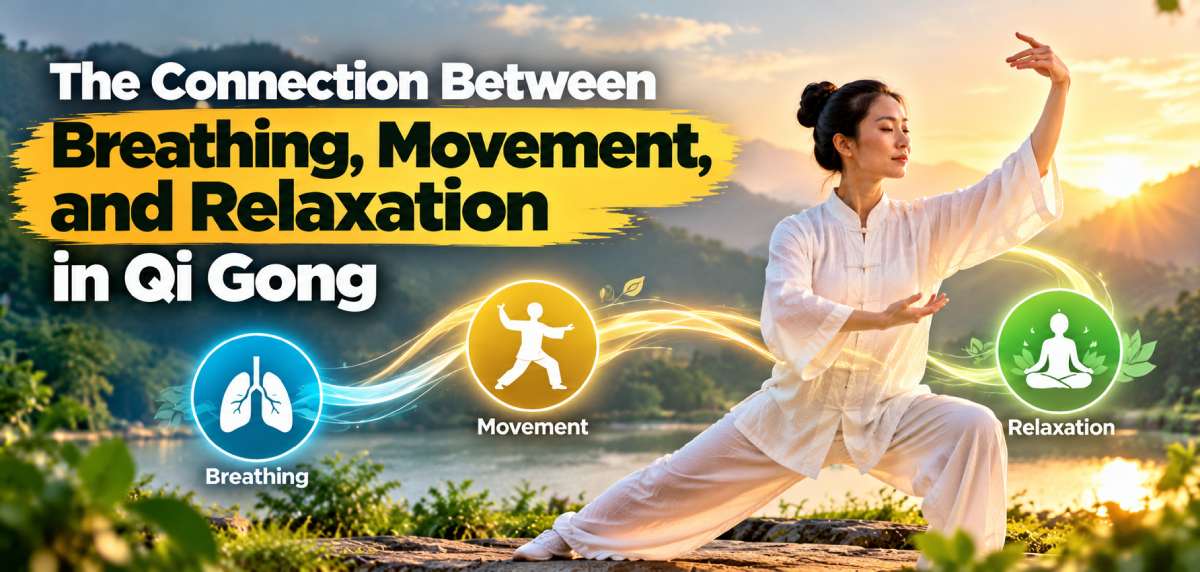
The Connection Between Breathing, Movement, and Relaxation in Qi Gong
However, Qi Gong is not just an exercise; there is much more to it that goes beyond its soft exercise form. Qi Gong is an exercise of breathing, movements, focus and relaxation that, when practised as a whole, can put one’s body in a state of tranquillity and relaxation. Qi Gong practice can be very beneficial to those people who experience stress, stiffness, exhaustion and constant pain.
In PainBegone Clinic, Qi Gong practice is considered an effective means to improve one’s overall well-being and health rather than some mysterious philosophy. PainBegone Clinic provides classes of Qi Gong, wellness coaching, and consultations in health improvement and relaxation.
What Qi Gong Really Means
Qi Gong or Qigong is the name for an ancient Chinese practice involving slow movements, breathing techniques, and meditation. Qi Gong is often described as “energy work” or “life energy cultivation.” However, modern practice places greater emphasis on practical benefits, such as deep breathing, relaxed muscles, and proper posture.
While intense physical training requires endurance of pain and exhaustion, Qigong is usually gentle and round in movement. Its breathing is slow and deep; it goes together with the bodily movements. It makes Qigong accessible for different types of people, starting with beginners and ending with elderly people, busy people, athletes who want to practice their recovery, and chronically tense people.
The real magic of Qi Gong is in the connection between its components. Breath alone can relax the mind. Movement alone can improve circulation and mobility. Relaxation alone can loosen up muscles. But all of these components combined can strengthen each other greatly.
Why Breathing Comes First
Since breathing is readily accessible, it is the easiest way for beginners to start their experience in practising Qi Gong. There is no need for any special equipment, a spacious place to practice, or a specific physical condition in order to observe one’s breath. Breathing in Qi Gong is not forced and not held, but gently directed to become deeper, slower, and more natural.
Many people tend to breathe shallowly unconsciously, especially in their hectic workdays and during long hours of sitting at a desk. Chest breathing often contributes to tension in the neck, shoulders, jaw, and upper back. To help address this, Qi Gong often incorporates abdominal breathing, also known as belly breathing, which directs the breath towards the lower ribs and abdomen rather than the upper chest.
Slow conscious breathing might help relax the body. As it is mentioned in the research about Qi Gong and similar practices, abdominal breathing may activate the vagus nerve, which regulates heartbeat, digestion and the body’s stress response. That explains how slow breathing makes a tensed body less braced and a crowded mind less busy.
The approach to breath in the case of the PainBegone Qi Gong training is quite different. Instead of instructing the person to “take a deep breath” and achieve immediate relaxation, the emphasis is put on awareness, that is, on sensing the breath’s movement, sensing its restrictions and sensing the body’s reaction to the longer exhalation.
Movement as Medicine for a Tense Body
The movements in Qi Gong are intentionally light, yet light does not mean powerless. The slow pace of movement provides the nervous system with enough time to perceive the body’s actions. Additionally, it permits the joints to work their way through comfortable ranges without sudden impacts that may inflame stiff regions.
Slow movements make one more aware of them. You may become aware that your shoulder unintentionally lifts during your arm movements, that your weight distributes unevenly through your feet, or even that you are tensing your hands without a need to. It turns ordinary movement into feedback.
The Qi Gong poses normally involve open-close, up-down, expand-gather. These kinds of poses facilitate circulation, coordination, and balance. Also, these poses make it possible for the body to detect rhythm, working without tension and action without speed. The study on Qi Gong reveals the fact that the Qi Gong benefits arise as a result of the interaction between a number of critical elements such as physical exercises, activity and relaxation, concentration, and conscious breathing.
In a case where a person experiences tense feelings after sitting, strained shoulders as a result of stress, or general feelings of fatigue, it would be nice for him/her to perform some moves that do not necessarily suggest an end goal. It is not all about performing some particular poses or stretching the muscles.
Relaxation Is Not Doing Nothing
Many people think relaxation means collapsing onto a couch or switching off completely. In Qi Gong, relaxation is active. It means reducing unnecessary effort while remaining present, upright, and engaged. This is sometimes called “active relaxation,” and it is one of the defining features of the practice.
Think about carrying a very heavy bag for a few minutes. You might feel tightness in your shoulders, shallow breathing, and tension in your jaws unconsciously. However, after putting the bag aside and releasing your shoulders while letting your hands hang loose, your body remains awake and aware but no longer works harder than it should. This is more or less how relaxation through Qi Gong is attained.
This distinction matters for pain and stress. Under such conditions, there is a high probability of muscle contraction even without necessity. This will inevitably cause the development of pain, restricted movement, insomnia, and brain fatigue. The practice of Qi Gong offers an opportunity to interrupt this cycle through concentration, movements, and slow breathing.
The results of Qi Gong studies show that Qi Gong practice is accompanied by a state of alert calmness: one becomes more relaxed and attentive. Importantly, this does not mean that Qi Gong makes people passive but rather helps them attain balance between regulation and activity.
How Breath and Movement Work Together
One of the most practical things that can be learned from Qi Gong is how breath and movement interact with each other. In general, when faced with stress, one’s breath becomes rapid, shallow or held. But in Qi Gong, the breath serves as a guide to movement. Movement is regulated by the breath, which in turn is guided by a peaceful intention.
For instance, while raising one’s arm, one could breathe in, and when lowering or collecting the arms, one could breathe out. It doesn’t work for every form of Qi Gong exercises, but it shows the concept – the breath gives the movements a rhythm, and the movements give the focus to breathing.
This connection between breath and movement helps you stay grounded by focusing your attention on both at once. Rather than trying to stop your thoughts, simply concentrate on a steady, rhythmic activity.
Gradually, one changes one’s reaction to stressful situations. Instead of immediately tensing up the shoulders and holding one’s breath in the stressful situation, one starts feeling the reaction at an early stage. And this tiny pause allows one to make a choice and to do something different: soften one’s jaw, prolong one’s exhale, relax shoulders, move more easily.
The Nervous System Connection
One good way to comprehend Qi Gong is through its effects on the nervous system. There are two primary states of the body, one in which the body is preparing for action and threats, and the other where the body is preparing for recuperation and digestion. In contemporary times, many people are often kept in the former state even though there is no threat in their environment.
Doing Qi Gong practice does not imply removing the stressor from one’s life; rather, it gives the body experience of being safe and regulated. Slow breathing, slow movement, and mindfulness may help reduce sympathetic reactions and strengthen parasympathetic reactions.
Qi Gong is often used as a complementary approach to stress management. Research has also explored its potential benefits for sleep, blood pressure, anxiety, depression, and cardiovascular and respiratory health.
As for the PainBegone program, the scientific facts are in line with the experiences of clients in their daily life: When given an opportunity to relax, the body finds it easy to move, sleep, focus and tackle all challenges.
Why Qi Gong Supports Pain and Discomfort
Qi Gong is not a universal treatment for pain, nor does it replace proper medical evaluation or treatment. However, it may help people whose pain relates to muscle tension, stress, poor movement patterns, fatigue, or reduced mobility. As noted by the National Centre for Complementary and Integrative Health, consistent practice of Qi Gong might benefit individuals with fibromyalgia in terms of their experience of pain, sleeping, and physical and mental functioning.
Pain is not simply physical. It affects breathing, postural alignment, emotional state, sleeping, and the feeling of safety when moving. Pain avoidance, on the other hand, causes people to move less; therefore, they become stiffer and more sensitive. Qi Gong provides an easy path between moving comfortably, breathing gently, and relaxing the body’s constant alertness.
PainBegone’s approach reflects this broader view of wellness. The services provided by the centre include Qi Gong classes, well-being education and coaching, natural healing sessions, hypnosis, energy balancing, and sound and vibration well-being services. The idea here is for clients to be able to find pain relief and relaxation through a number of different methods rather than just one approach.
Here, the essential thing is that of individualising the treatment. Those who have gone through stress need breathing-based relaxation, whereas those whose backs have become stiff owing to sitting at a desk all day long need movement-based relaxation. This can be done through a well-guided program.
A Simple Way to Experience the Connection
There is no need to have full knowledge about the movements in Qi Gong for one to be able to understand the relationship between breathing and movements in regard to relaxation. First of all, assume a comfortable posture of either sitting or standing. You must ensure that you have firm foot support and relax your shoulders.
Start the breathing process by inhaling through your nostrils while making sure that you allow the expansion of your abdomen and lower ribs. During the process of exhaling, do not apply any form of strength to your breathing process, but allow the breathing process to be done gently. While exhaling, gradually lift your hands forward during inhalation and lower them down during exhalation.
Do this exercise for some minutes. This is not about stretching your body or practising deep breathing techniques. This exercise enables the exhaling breath to inform your body that it is safe.
Bringing Qi Gong Into Everyday Life
The more consistent you become in the application of Qi Gong, the more it will benefit you. Five-minute mindful sessions will help you more than long sessions that exhaust the body. Thanks to its versatility, you can practise Qi Gong in the morning, during work breaks, before bed, or on recovery days between other workouts.
Qi Gong programs offered by PainBegone aim at helping people restore harmony and health, achieve greater mobility, concentrate better, and support both their physical and mental state. This approach offers personalised healthcare tailored to each client’s needs.For technology enthusiasts who spend much of their day in front of computer screens or on smartphones, Qi Gong can be particularly beneficial. It does not require any advanced technical knowledge, is easy to perform, and is very much humane. All you need to do is pay attention to yourself and your breathing.
Conclusion
There is no division into respiratory practice, movement, and relaxation in Qigong practice. All these things form one integrated system: breathing manages the nervous system work, movement makes our body relaxed and more conscious, and relaxation shows how to release excessive muscle efforts. All these things together form a condition of relaxed but focused awareness which is so important for movement, stress management, sleep, and health in general.
This is the approach that PainBegone offers its clients using its Qigong classes, wellness coaching, and natural wellness programs aimed at helping people alleviate their pain and restore harmony in their lives and daily activities. For all those people, who would like to give mind-body practices a try or find some more gentle way of tension and fatigue management, Qigong is an excellent choice: learn to breathe, move, and relax consciously.